Punks in Sonoma County? A conversation about DISTURBING THE PEACE: Sonoma County’s Early Punk Underground museum exhibit
A conversation with KQED's Gabe Meline and Museum of Sonoma County's Jon Del Buono about the museum's punk rock exhibit, "DISTURBING THE PEACE: Sonoma County’s Early Punk Underground"

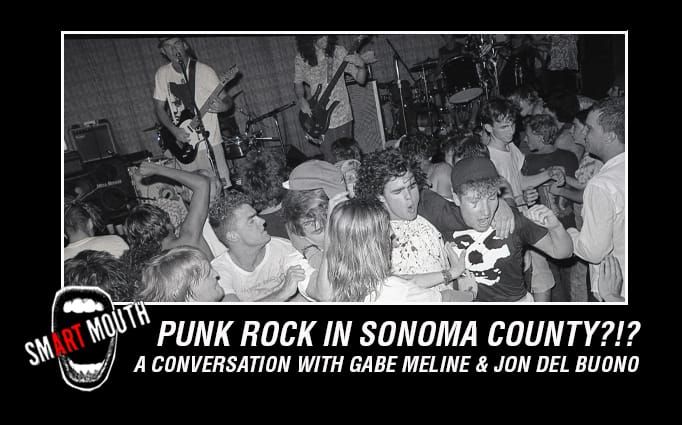
If Punk rock can come from anywhere. Why not Sonoma County?
Many folks would be surprised to learn punk rock exists here currently. In fact, Punk rock has existed in Sonoma County for almost as long as punk has existed. Those same folks would be just as surprised to learn how many influential punk icons had early roots in Sonoma County or now call the place home.
A new museum exhibit aims to showcase the story of punk in Sonoma and work to showcase the fans and many talents who got their start in this community, all while working to shape the future of Sonoma County’s punk community.
"Disturbing the Peace: Sonoma County's Early Punk Underground" exhibit opens this Friday, April 17 at the Museum of Sonoma County. The exhibit will run through August 23rd at the Museum of Sonoma County, located at 425 Seventh Street in downtown Santa Rosa.
According to the museum's press release, the exhibit will feature:
● The largest-ever public display of vintage Sonoma County punk flyers from 1980–1999
● Photos of dozens of local bands like Victims Family, Capitalist Casualties, Insanity Puppets, the Invalids, Kid Dynamo, the Conspiracy, Nuisance, Disciples of Ed and more
● A listening station with over 50 songs by local punk bands that are unavailable on streaming services, digitized from out-of-print records and rare demo cassette tapes
● A stage with drums, bass and guitar for visitors to play, whether one knows how to or not
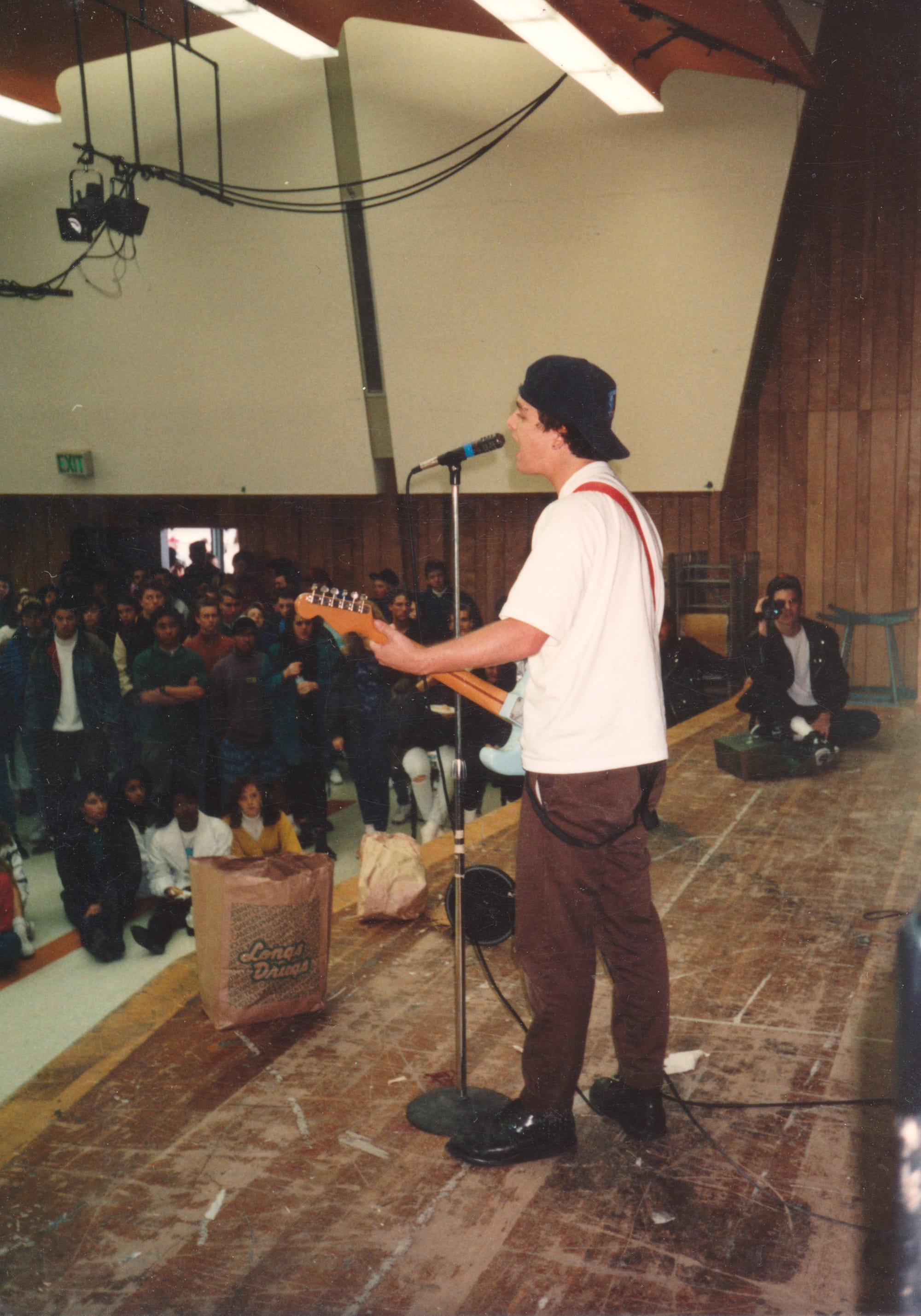
● Never-before-seen footage of Green Day playing at Santa Rosa High School in 1991
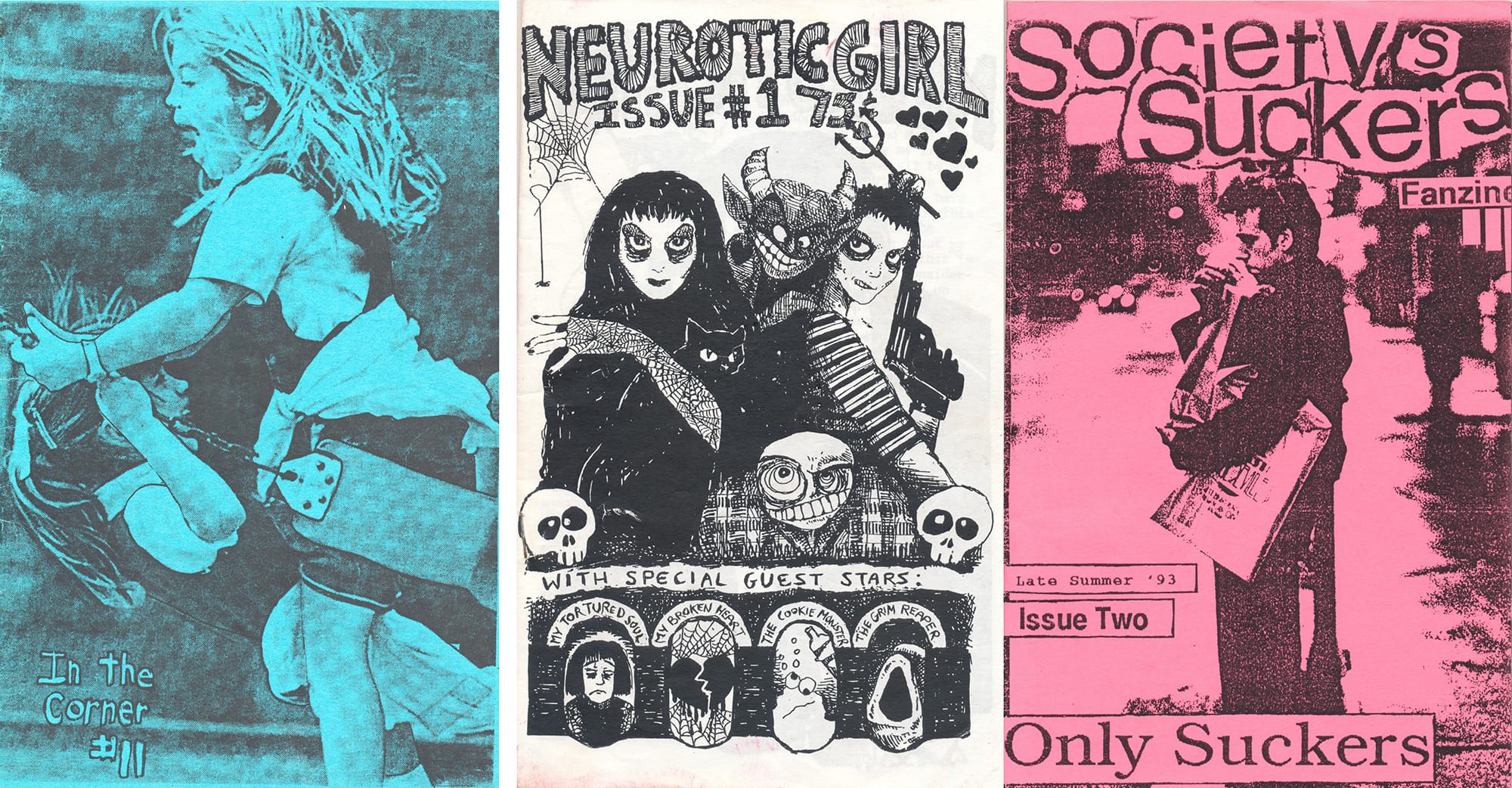
● The largest assembled collection of pre-Y2K Sonoma County punk zines
● Historical materials from local chapters of Riot Grrrl, Food Not Bombs, Copwatch and other grassroots groups active in the punk scene
● Photos, flyers and ephemera from touring bands like AFI, Dead Kennedys, Sublime, Red Hot Chili Peppers, Metallica, Operation Ivy, Primus, Mr. Bungle, Neurosis and Black Flag
● A turntable and cassette deck on which visitors can listen to local punk bands’ releases
A public opening and reception is taking place this Friday, April 17 from 5-7pm, followed by an after party and concert with Victims Family, Sonoma County’s longest-running punk band.
The band will perform their 1986 album ‘Voltage & Violets’ in its entirety with local openers The New Trust and A New Low. The show is right around the corner from the museum at Barrel Proof Lounge located at 501 Mendocino Ave. The concert is currently sold out, but they will have a very limited amount of tickets available at the door.
“Disturbing the Peace” is curated by Gabe Meline, Senior Editor at Bay Area PBS/NPR affiliate and news source, KQED. Museum of Sonoma County's Exhibition and Facilities Manager Jon Del Buono came to Meline with the initial idea about the exhibit and helped shape the event.
With too much coffee rolling around in my own bloodstream, I met with Meline and Del Buono via Zoom early on a Monday morning to chat about the exhibit.
I felt crazy with the massive amounts of caffeine and lack of sleep from a long weekend of work, but as soon as Meline electronically greeted me I felt like I was spending time with an old friend. He has a way about him that just relaxes you. He reminded me of a favorite teacher or older mentor type. His sense of ease made me immediately feel at ease, and it made me want to talk his ear off in a way that must be fantastic for his journalism career.
Del Buono listens from his own home. He lets Meline take the lead on most questions, only steering the conversation and providing his context when needed. It shows great leadership skills. He knows when to jump in, and when to let others handle it. Meline is the curator of the event, but he’s there to help steer the ship towards its true north.
Meline has lived in Santa Rosa his whole life. Del Buono has lived here since he was about ten years old. Their lives have been spent in Sonoma County as community participants before eventually becoming leaders. They’ve watched it rise and fall and hope to be there when it rises once again.
The simple inspiration for the exhibit happened during an impromptu meeting between Del Buono and the museum’s curator of history, Eric Stanley. Del Buono was flipping through a book of museum exhibits and stopped on one about a punk rock exhibit in New York.
He immediately knew this was what he wanted to help create. Del Buono would pitch Stanley on the project in that very meeting, “We can do this here in Santa Rosa. I know the people who could do this,” he recalled.
Del Buono started calling his friends about his idea for the project. Everyone he spoke to told him the same thing: “you got a call Gabe!”
“I’ve had boxes in my garage, waiting for that call,” Meline says with a laugh.
Meline has been collecting all his life. “I've just been a collector/hoarder of punk ephemera, [especially] local Santa Rosa and Sonoma County flyers, photos, set lists and demo tapes.”
The exhibit was an easy sell for Meline. He was already impressed with some of the Museum's previous work. “I had seen a lowrider exhibit at the Sonoma County Museum and I was really impressed by it,” he explains. “Here's a subculture that's been maligned and marginalized and is at war with the cops.”
He continues, “Doing an exhibit on the lowrider community, they gave it the dignity and respect that it truly deserves. That showed me that the museum was serious and could do something good with the punk scene.”
When asked why they are looking to celebrate the history of the punk scene now? Meline pauses to think it over before answering truthfully, “The first thing that came to my mind? People are dying,” he says with a dark laugh. “You want to catch people's stories while they're still here.”
“It feels a little weird to look at this as history, but it goes back 40-45 years.” Meline continues, “I do think it's smart to capture it before people's memories deteriorate. Much of the Sonoma County Punk scene’s history has really been an oral history up till now. People are still sharp enough to remember events as they actually happened.”
Del Buono jumps in to continue, “Rather than having the museum as the arbiter of what is history in Sonoma County, the museum’s been focusing more on oral histories and having communities tell their stories.”
“For the lowrider exhibit, we met with a large contingent of lowriders and let them tell their story. It wasn't us telling the lowrider story, It was the people,” explains Del Buono.
“We opened up our permanent exhibition upstairs, Sonoma County Stories. It is heavy on oral histories and having people tell the story of Sonoma County. We want to let people know that their story is Sonoma County history.”
Meline shifts the conversation back to punk, and why now, “There is a ground swell of resistance in this country and especially in Sonoma County,” says Meline. “Punk is a very anti-authoritarian subculture and we have authoritarians running the country now. We have literal Nazis in this administration. Punk gives you a good blueprint for kicking them out as swiftly and mercilessly as possible.”
When asked what has surprised him about curating the exhibit, Meline reflects, “One thing that comes to mind is just how many people from the punk scene, against the odds, became functioning thriving successful members of society without capitulating and sacrificing their punk ideals. That is a mark of success.”
Meline continues, “People in the punk scene do a lot of different stuff until they find their role. Some people are in a band. Some people book shows. Some people are putting those records out. Some people are making zines and chronicling the scene. Some people are making flyers and developing their design and illustration style.”
Meline gives a few examples of those who have found success through their journeys in the Sonoma County punk community:
“There's a flyer illustrator Ruben Hickman who did a ton of Sonoma County flyers in the 80s. He worked at DreamWorks for many years. He worked on the first two Shrek movies. He was the lead illustrator for the Bob's Burgers movie. He took his screwy little satanic drawings on flyers and turned it into a career.
“There's a woman, Kat Sirdofsky, who owned a record store across from Santa Rosa High School called Rebel Records. She stocked a lot of imported vinyl and a lot of magazines. She booked a ton of shows at the River Theater, including a Black Flag show in 1984.”
“When she went to LA, Kat managed the songwriter Linda Perry, which meant that she worked with Christina Aguilera and Pink. She was a big person in the LA scene.”
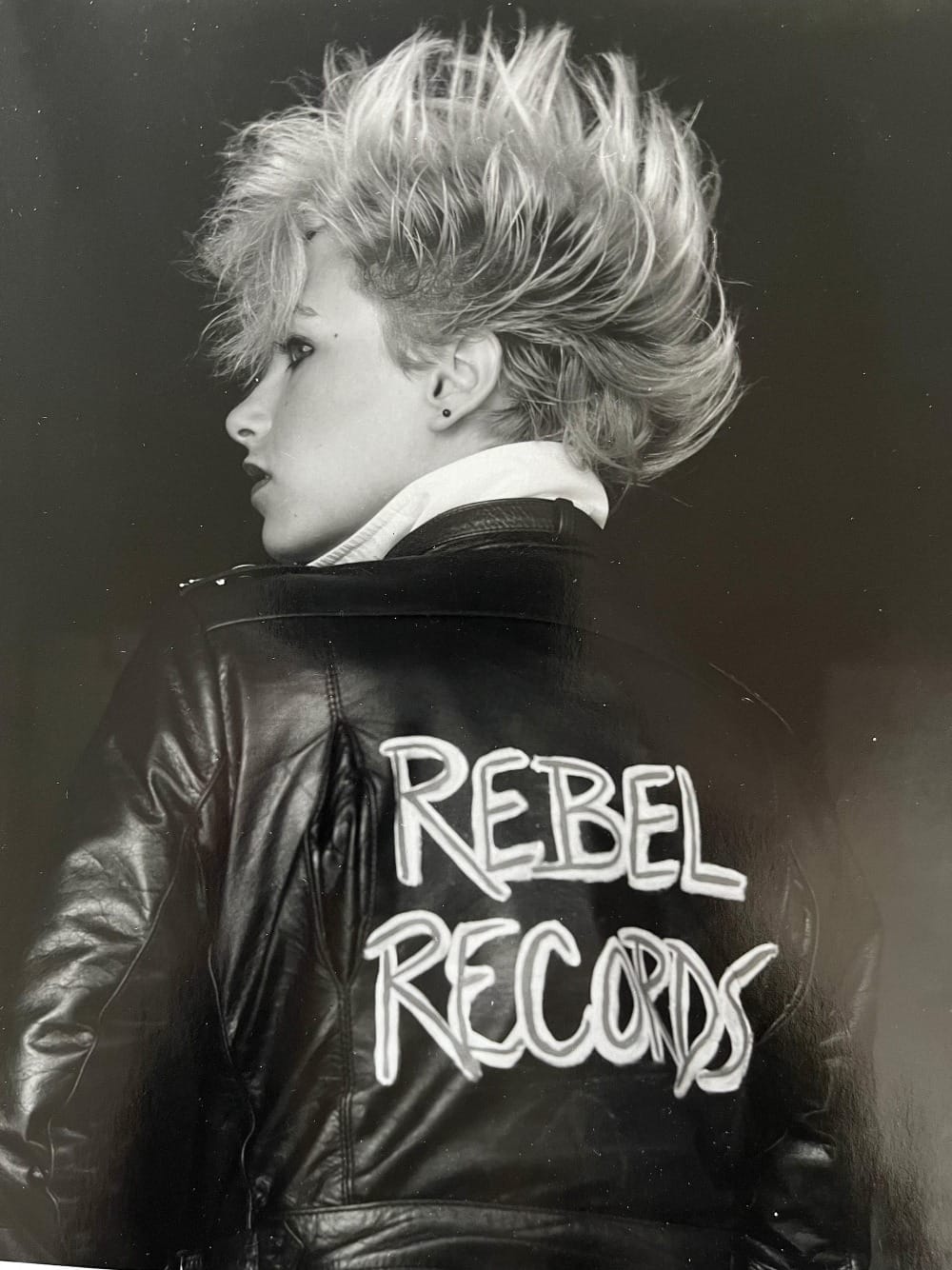
“It's Punk University,” Meline reflects. “Those are both examples of people finding their way through punk, finding their skill set, and turning it into a career without necessarily going to college.”
Meline has found his own path through punk. These days he's a senior editor and writer for the popular KQED, but his long journey started as a teen interviewing bands and making fanzines.
When asked how it feels to still be doing the proverbial “IT” all these years later, Meline laughs and asks us to hold on for a second while he disappears from the screen.
“Here it is,” he says as he reappears on the screen with a laugh. He holds up a handmade fanzine, “When I was in high school I did this zine called, Boy Does High School Ever Suck.”
He continues, “I was 15 years old and when I look through this zine, I have freelance contributors whose pieces I edited. Green Day was the first band I ever interviewed. I transcribed it and edited it down for length and clarity. I did the layout. I chose the photos and all that shit.”
“And I’m still doing all that shit now,” Meline says with another big laugh. “That’s my job. I did a lot of other things in the local punk scene. I booked shows. I put out records. I played in bands. I designed flyers. I worked at a record store selling other people's demo tapes on consignment. I did just about every little thing that I could do. Being a journalist was the one that stuck.”
Meline shares his dream for the exhibit, “I just hope people will come away with a better understanding of [punk] in all of its messiness.”
“I would love it if young people came away from it with a better understanding of what's possible when you have something to say,” says Meline. “You don't ask for permission, you do it anyway. Find like-minded people to connect with and to imagine just a better way of life and a better world.”
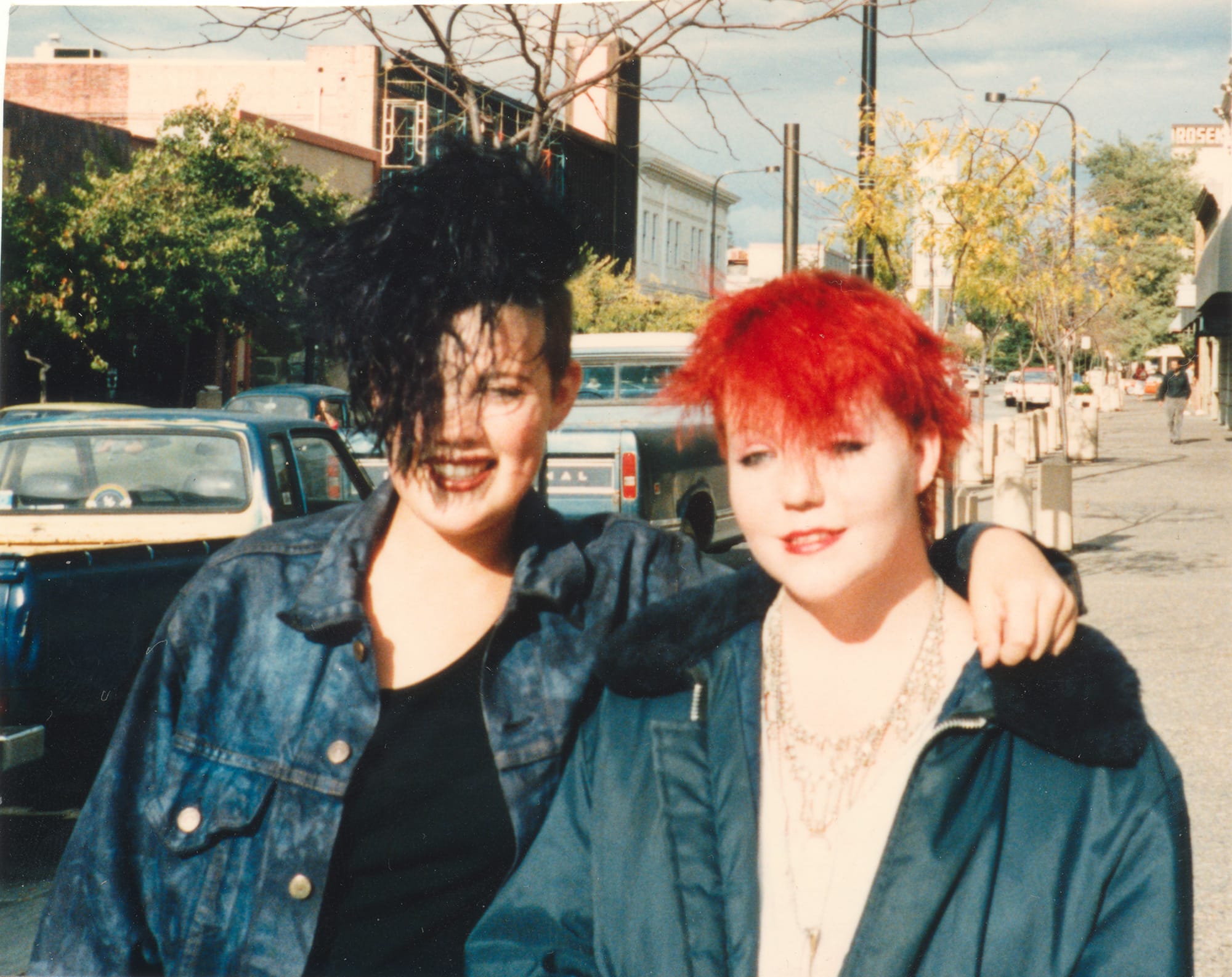
When asked about how to attract those from outside the punk community to experience the exhibit, Meline responds, “Punk is really inscrutable.”
Before answering, Meline pauses. He thinks it over before thoughtfully explaining his worldview of the punk community. When he speaks, he sounds more like a teacher than a fan or a reporter. There’s a kind of softness in the way he describes such a rough world, that you know he really loves it, even in spite of itself.
“There's a lot of tension within punk. Punk can be incredibly intelligent and it can also be really remedial and moronic.” He continues, “It can be very, very earnest and it can be very sarcastic and it can be very political and also very apolitical. Sometimes in the same room and sometimes in the same band.”
“That constant tension is part of the great social experiment of punk. It doesn't make sense to anyone on the outside,” Meline explains. “You'll find in the wall text at the exhibit it's a little more explanatory than it might need to be for people who were involved with it. But it's open to the public. It's not a punk show at a warehouse on the cutty side of town,” Meline says with another laugh.
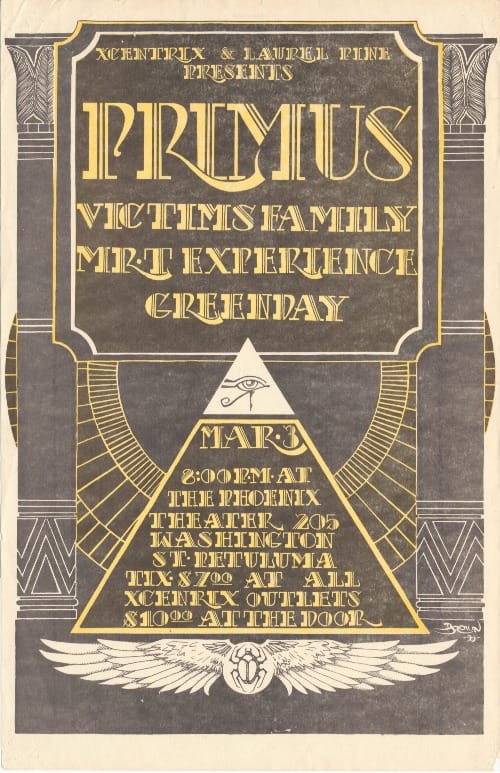
Del Buono jumps in, “A lot of the audience at the museum are open to learning about new things.”
Del Buono continues, “There's a local woodworker who’s a retired doctor telling me, ‘I used to take both my sons to The Phoenix!’ He has a very close connection through his children and he's excited to come to the show. I think there's a lot of people who would be interested in coming to this exhibit. I think they're primed for it.”
Meline adds, “That also answers the surprising question: Just how many people do have a connection to punk. Either a secret punk past or you know someone in their family or close circle of friends.”
“The title of the exhibit is ‘Disturbing the Peace.’ Implicit in that title, the hippies were calling for peace and trying to find their own peace. They were getting back to the land or the white flight from the big city to the suburbs or the exurbs,” explains Meline.
Meline shifts the conversation to the lack of activities here for the youth. It’s both a memory of his past, while thinking about the current state of Sonoma County music community, “There’s nothing to do here. Sonoma county is very inhospitable to teenagers.”
“Maybe some of them are just eager for action,” Meline continues. “Maybe some of them come from broken homes. Maybe some of them are just alienated and picked on at school. Maybe some of them are just plain bored, but like these misfits and outcasts kind of find each other.
“In the 80s, the early punks just banded together and they were like, ‘How are we going to make this happen?“ Where are we going to create a scene?’”
“Where it happened a lot was in fields, barns, backyards and house parties. Whatever fly-by-night venue they could find, to create a diy network that got really, really strong around here,” reminisces Meline.
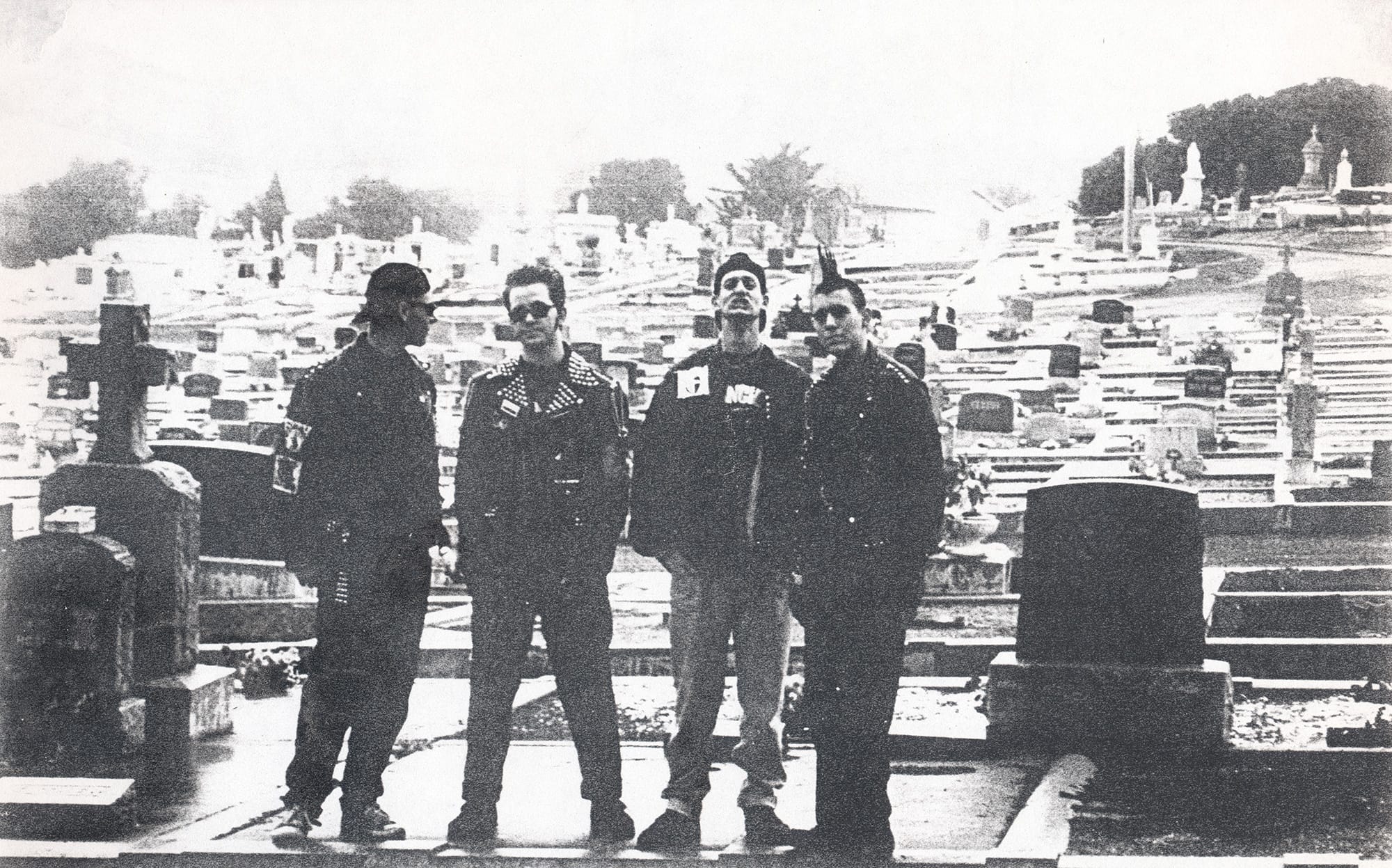
“It's been a strong enough scene that we've helped bands like AFI.” Meline continues, “We really supported groups like Green Day who played up here so many times. Then there’s groups like Primus. Primus’ Les Claypool decided to move up here. Maybe it's just for fishing on the Russian River, but people like Sonoma county.”
“I think there is something distinct and unique about Sonoma county. Musically the style is kind of a melting pot of punk but also jazz, country, metal and funk.
“Victims Family is a good example of that,” continues Meline. “Victims Family started in 1984. They're still playing, which is amazing to me.”
“I think we can be proud of what we did in the punk scene. And continue to do.” Meline continues, “The punk scene seems really strong right now. It's still really underground and shows are still happening at houses and backyards and taquerias and stuff.
“I talked to younger people I work with and they don't believe that there actually used to be shows downtown,” recalls Del Buono. “There used to be two or three places in the late 90s and early 2000s that were all ages venues. They were weird little spots, but they would do them. Now there's nothing downtown. There's not a lot of live music at all.”
“But I see flyers and I don't know where the places are!” confesses Del Buono. “It doesn't have an address. It just says the name of a place and you have to know somebody who knows where to go. So that gives me some hope that the kids are doing stuff.”
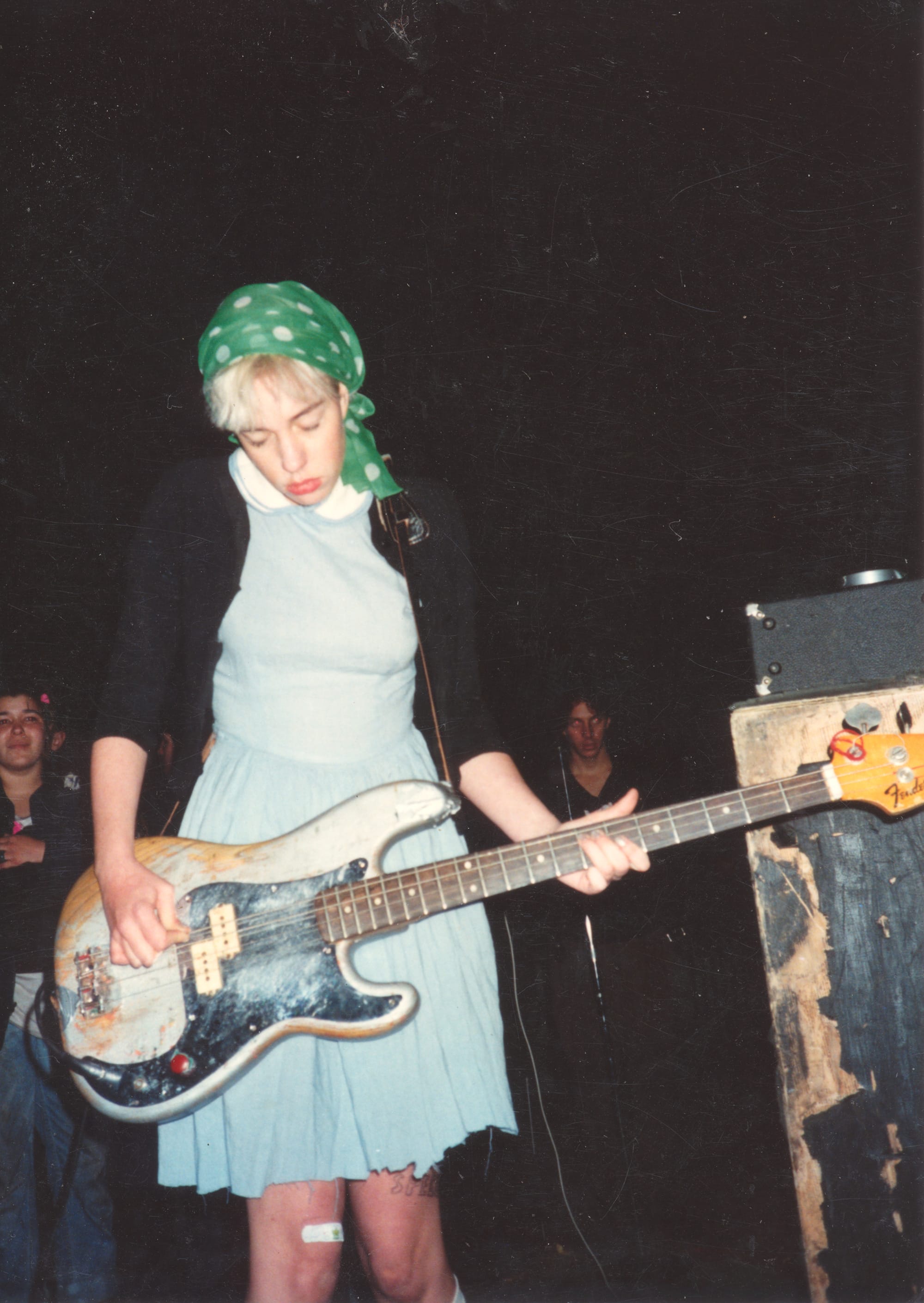
Meline adds, “But hunger is the mother of invention. Necessity is the mother of invention. That's a lesson that can be taken from this exhibit. If you don't have any outlet at all, you make your own.”
Before we end the call, I ask Del Buono and Meline if there’s any final thoughts to which he replies with a laugh, “I'm very excited about some of the stuff that we've been finding and I want to list it all off right now! But you gotta leave some things to get a surprise when you walk through the door.”
But Meline pauses for a moment, he’s got something else just off screen he wants to show us. He pulls out a vintage concert poster and explains to us, “Jon, I'm bringing this in today. I got this giant poster just the other day! The Imposters were a local band around here. Yeah, all the other bands listed are from San Francisco. But if you look closely it's at the Showcase Theater on Keller and Washington street in Petaluma.”
“Oh wow!” exclaims Del Buono as he realizes what he’s looking at.
“This is the Phoenix Theater before it was even called the Phoenix Theater. This is the very first punk show that ever happened at the Phoenix Theater.”
“As far as parting thoughts or words or anything, God bless Tom Gaffey,”
Meline’s final words will ring true to anyone who's been a small part of the Sonoma County punk community. Gaffey is of course the Founder and Theater manager of the historic Phoenix Theater in Petaluma. One of the still standing breeding grounds for punk rock and alternative music in Sonoma County. It's a beautiful old theater and community gathering space. It's still going strong and with a little participation from the community it will continue to do so for many generations to come.
For more information on DISTURBING THE PEACE: Sonoma County’s Early Punk Underground opening night event please visit: KQED. For more information on the Museum of Sonoma County and the ongoing Disturbing the Peace exhibition please visit: museumsc.org
